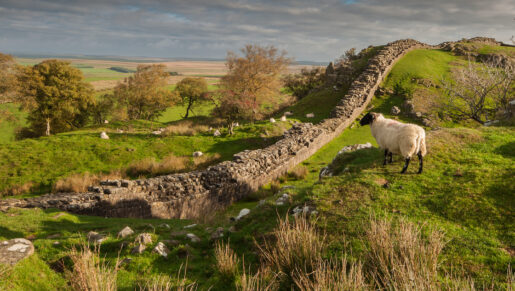
Visiting Hadrian’s Wall: a guide to every season
Start Exploring
Visiting Hadrian’s Wall Country is worthwhile in every season. Here is what each one offers.
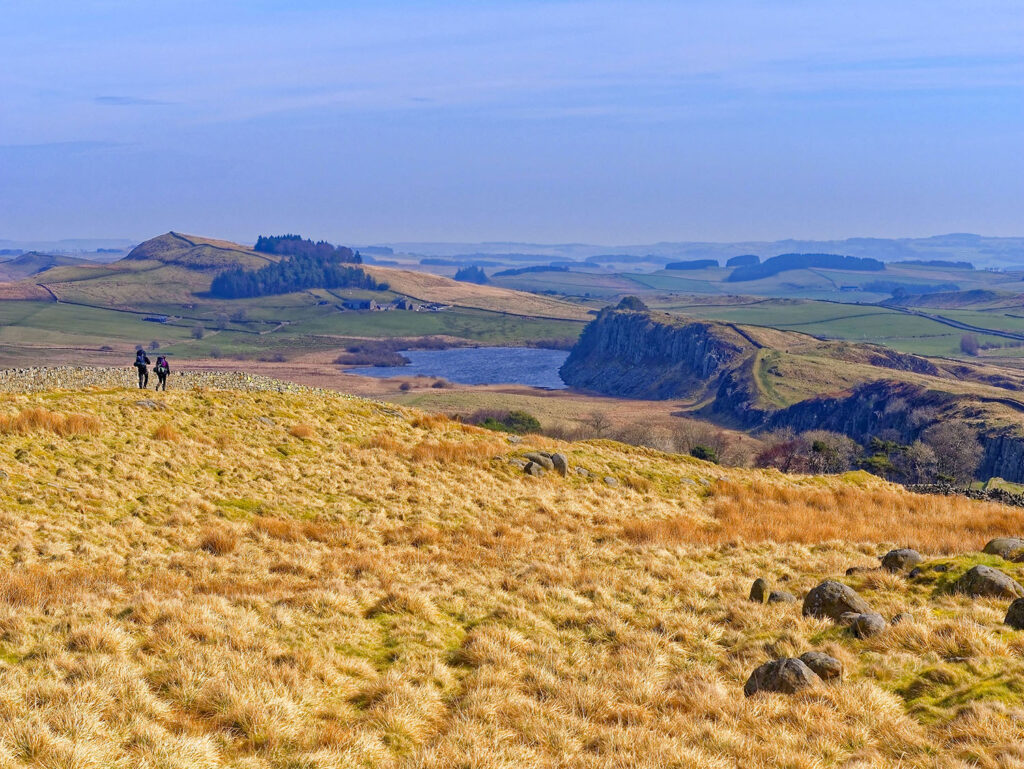
Spring: the Wall wakes up
Spring is when Hadrian’s Wall Country bursts back into life. From late March onwards, the days lengthen noticeably and the landscape turns vivid green.
The most significant reason to visit in spring is the return of the excavation season. The season at Vindolanda begins at the end of March, with excavations resuming at Roman Magna a few days later. Professional archaeologists work with volunteers who come from all over the world to be part of the digs. Every year there are some brilliant finds made.
Visiting during this period means you can watch archaeologists working in the trenches. When the weather turns, the Vindolanda museum provides hours of cover. Its collections include the Vindolanda Tablets, the largest group of Roman writing on wood found anywhere in the Roman Empire.
Spring also brings wildflowers, lambs in the fields, and lengthening days, though the weather remains changeable. Easter and the May bank holidays see visitor numbers increase.
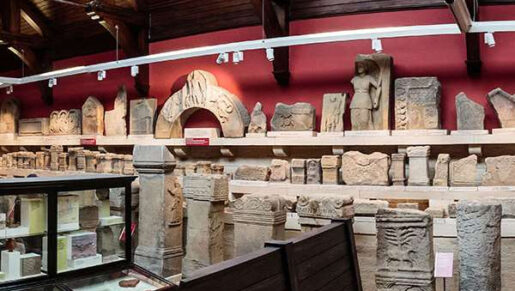
Chesters Roman Fort, a few miles from Hexham, pairs well with spring weather. The onsite Clayton Museum holds one of the finest Roman collections on the wall. The museum itself has acquired historical value in its own right as an intact Edwardian display of archaeological objects.Many people single out May as their standout month: the landscape is lush, the days are long and temperatures are pleasant.
What is the weather like in spring in Hadrian’s Wall Country?
Temperatures in spring typically range from 8°C to 15°C, with occasional rain and blustery stretches. A mixed itinerary of outdoor exploring and indoor museum time could work well.
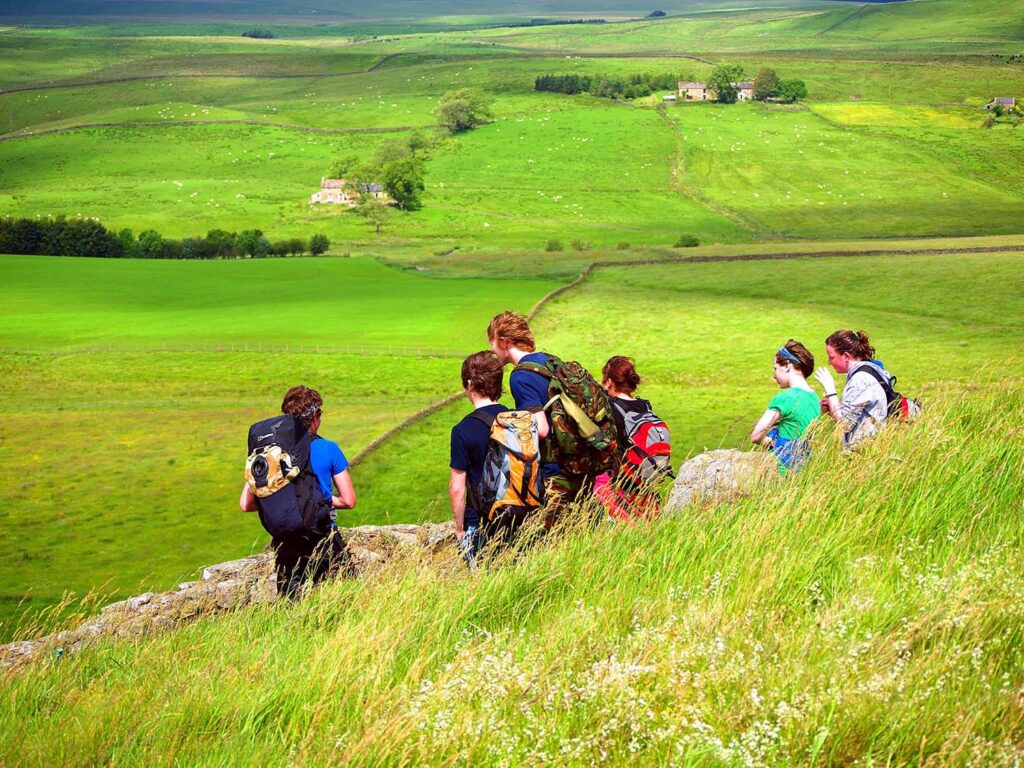
Summer: long days and warmer weather
Summer is when we welcome the most visitors to Hadrian’s Wall. The season offers drier conditions and warmer temperatures, with around 16 hours of daylight near the June solstice.
Track down a country show
Hadrian’s Wall Country ranges across glorious, unspoiled countryside, but visiting Hadrian’s Wall is about people not just the landscape. Summer is a time when our scattered rural communities get together at country shows. These make great days out and we’d encourage you to attend one if you can.
What’s on offer at the typical show? A central showfield featuring livestock competitions; pony shows, dog shows, and dancing; marquees with food and craft competitions (everything from giant leeks to the lightest Victoria Sponge, and intricately-carved walking sticks); vintage tractors; fell running; and lots of local food and drink.
County shows such as the Northumberland County Show (end May) and The Cumberland Show (start of June) attract tens of thousands of people. There’s then a range of smaller village shows such as the Roman Wall Show (early June); Gilsland Agricultural Show (early August); Slaley Show (early August); Dalston Show (early August); Bellingham Show (late August); and the Blanchland and Hunstanworth Show (late August).
Get your swimmers on
Bring a swimming costume on your travels and you’ll also be able to enjoy the closest thing that Hadrian’s Wall has to a lido at Haltwhistle, a historic market town. Three heated pools are on offer with a large grassy area that’s perfect for a picnic.
What is the weather like in Hadrian’s Wall Country in the summer?
Summer temperatures along the wall typically reach between 15°C and 22°C, though exposed sections on the crags can feel cooler. July and August coincide with UK school holidays and the central section becomes busier at weekends. Our advice is to book accommodation early and consider using the AD122/HW1 buses to travel from site to site.
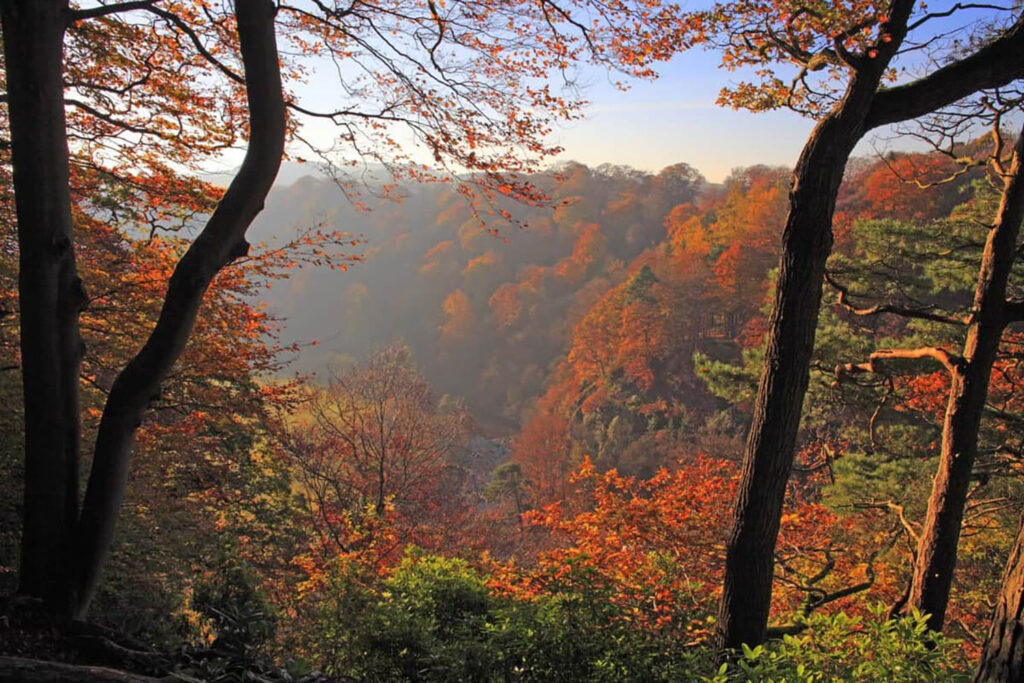
Autumn: quieter and cosier
September and early October are, for some, the perfect time for visiting Hadrian’s Wall Country. The summer crowds have thinned and the landscape takes on warm colours that make the views from the crags very striking.
Cooler temperatures suit steady walking, autumn colours enhance the landscape, and the sites are noticeably quieter. The same logic applies to museum visits. By September, every site has finished its busiest period of the year.
Corbridge Roman Town repays a slower visit at any time of year, but especially in autumn. The museum showcases an internationally important collection of finds with weapons, jewellery, personal possessions, grave finds and images of the town’s many gods. Its centrepiece is the Corbridge Hoard: an astonishing collection of personal possessions, weapons, and armour buried by a Roman soldier and discovered during excavation in 1964. Nearby Corbridge village is a charming little place with numerous cafés and independent shops on offer.
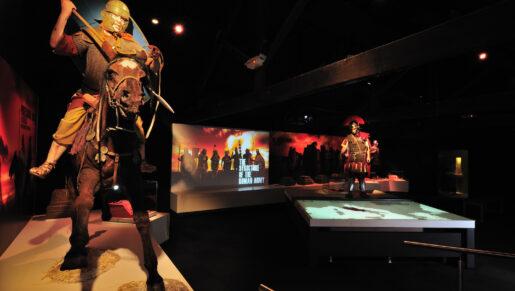
At Birdoswald, the visitor centre suits a cool autumn afternoon well. The exhibition introduces Hadrian’s Wall through life-sized illustrated Roman characters, hands-on activities including a working crane to demonstrate wall construction techniques, a quiz, signalling games, and a periscope that shows the view from the wall at its original height. The visitor centre also includes a model of the wall at full height and a tearoom serving locally-made food.
What is the weather like in autumn in Hadrian’s Wall Country?
Temperatures in autumn are similar to spring, roughly 8°C to 15°C, though weather becomes more unpredictable from mid-October. It’s best to check accommodation and transport options before you travel.
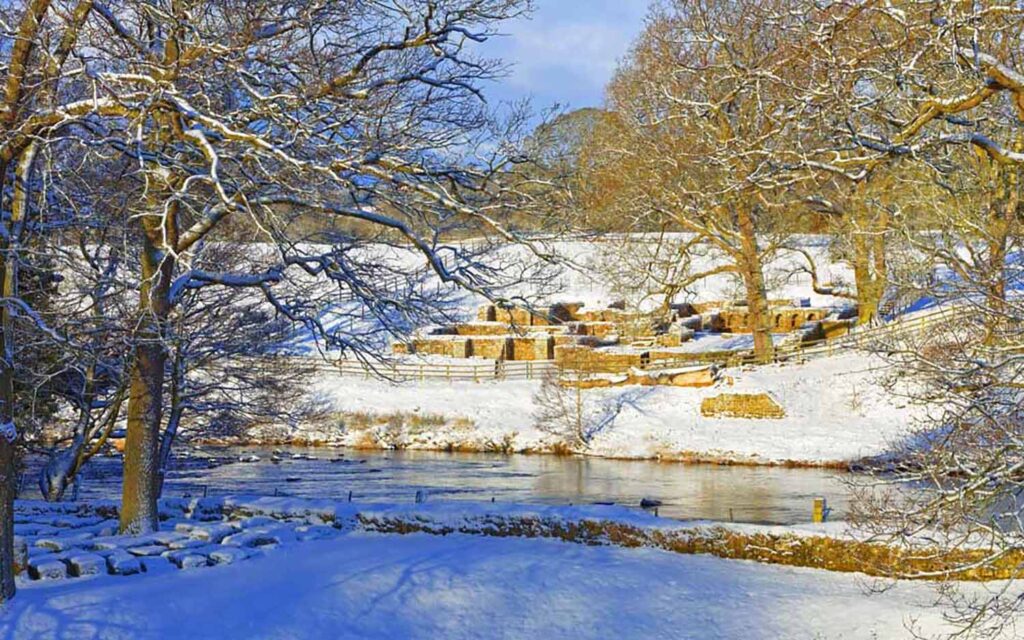
Winter: stargazing and frost on the ground
Winter offers something no other season can match: Hadrian’s Wall almost entirely to yourself. The Wall stretches across one of the emptiest landscapes in England and in January, with frost on the stones and a clear sky overhead, it can be extraordinary.
On clear, crisp days, the Wall in winter is genuinely beautiful. However, winter walking on the path itself demands proper equipment, with sunset by around 4pm in December. Visits to the major Roman sites are a different matter, though opening hours are reduced and it is worth checking before you travel.
The best season for astronomy
The central, rural sections of Hadrian’s Wall Country benefit from some of the darkest skies in Europe and winter is the best time to view the heavens. Astrotourism has seen a massive growth in popularity here in the last few years. Bookable options include themed evenings at the mighty Kielder Observatory; stargazing packages at the Twice Brewed Inn or Battlesteads Hotel and outdoor stargazing events by Northumberland National Park.
Winter bases for Hadrian’s Wall
Unless you are an experienced walker, a good winter itinerary combines short spells outside with longer time in the museums. There is enough to do along the Wall corridor to fill your days without needing to walk even a mile of the Hadrian’s Wall Path.
In the historic market town of Hexham, for example, the Abbey is free to enter and open throughout the year. Built largely from stone taken directly from nearby Corbridge Roman Town, its crypt contains original Roman inscribed stones reused by builders centuries after the Romans withdrew from this region.
Hexham’s independent shops, hospitality businesses that are open year round, Forum Cinema and Queen’s Hall Arts Centre make it a good base for exploring Hadrian’s Wall out of season. Its central location makes visits to sites with strong indoor options such as Corbridge, Chesters, Birdoswald, Vindolanda and The Sill National Landscape Centre straightforward.
Alternatively, you could combine a city break with Roman history. In Newcastle-upon-Tyne itself, the Great North Museum: Hancock is free to enter and worth a half-day of anyone’s time. The Hadrian’s Wall gallery includes a scale model of the wall. The wider museum features ancient Egypt, Greece, and Rome galleries.
At the eastern end of Hadrian’s Wall, Segedunum has a large interactive museum and a viewing tower. The tower provides outstanding views across the Roman site and Tyneside.
At the other end of the Wall, the city of Carlisle boasts the excellent Roman Frontier Gallery at Tullie.
What is the weather like in winter in Hadrian’s Wall Country?
In a word – cold! The rural sections of Hadrian’s Wall are very exposed and the weather is changeable. We’re not talking Scandinavian temperatures, but below freezing is not uncommon in winter.
The short answer to when you should be visiting Hadrian’s Wall?
In our experience, there is no bad time to visit Hadrian’s Wall.
- Spring gives you the archaeological excavations starting up and the landscape at its freshest
- Summer gives you the longest days, every site and museum fully open, and the most complete programme of cultural events
- Autumn gives you all of that without the crowds and the galleries largely to yourself.
- Winter gives the Wall a rare beauty, the best time for stargazing and a good excuse to cosy up with a hot chocolate
Our honest advice for visiting Hadrian’s Wall is to come more than once.
All images courtesy of Roger Clegg