Hadrian’s Wall Guide
Start Exploring
We’ve put together this Hadrian’s Wall guide to share our local knowledge and make your planning on visiting Hadrian’s Wall easier. Hadrian’s Wall Country is the only official destination website covering the full length of Hadrian’s Wall – a UNESCO World Heritage Site built by the Roman Emperor Hadrian from AD 122.
The Wall stretches 73 miles (117 km) from Bowness-on-Solway on the west coast to Wallsend on the River Tyne in the east.
Hadrian’s Wall Country spans the narrowest part of England from coast to coast. It takes in Roman forts; museums; walking trails; villages, market towns and two cities across three counties.
When is the best time to visit Hadrian’s Wall?
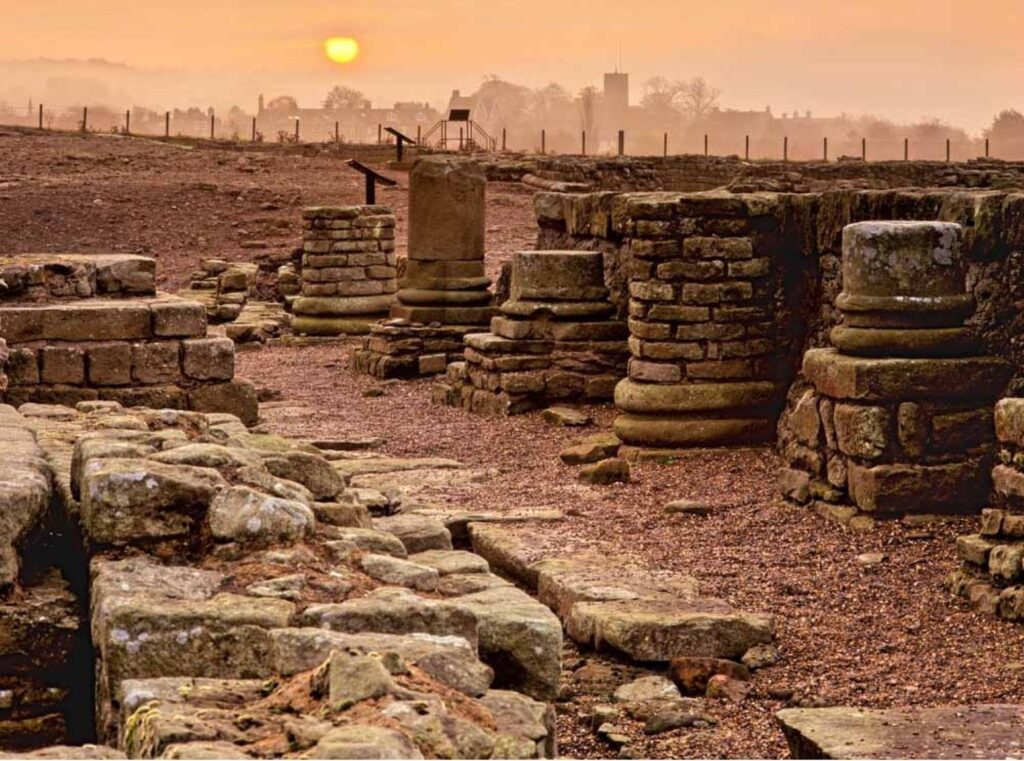
Hadrian’s Wall Country is open to visitors year-round. Spring and early autumn (April–May and September–October) are often ideal – the landscape is beautiful, visitor numbers are lower than summer, and the weather is manageable for walking. Summer (June–August) is the busiest season and offers the longest days and the AD122 seasonal bus service. Winter visits are quieter and atmospheric, though some attractions operate reduced hours and the weather can be cold and wet.
Want to know more? We have a fuller exploration of the seasons on Hadrian’s Wall here.

How long does it take to see Hadrian’s Wall?
It depends on how you want to experience it:
There is no single ‘right’ amount of time as the Wall rewards as many repeat visits as you can give it
- A single day is enough for a focused visit to two or three key sites in an area. For example, head to the central section and visit Housesteads Roman Fort, Chesters and Corbridge Roman Town or combine Vindolanda with the Roman Army Museum. Or head into Newcastle and explore the Roman Gallery at the Great North Museum and the outline of the Roman fort now under the New Castle.
- A weekend allows for a fuller experience. Travel along the World Heritage Site and get an appreciation of its changing character as it stretches across the country from coast to coast.
- On a city break? It’s easy to access an urban slice of Hadrian’s Wall such as Segedenum Roman Fort at Wallsend or seek out the remains of the Wall right in the middle of the modern streets and houses of West Denton. You will be amazed what you find.
- You can be based west and combine Hadrian’s Wall with the Cumbrian coast and the city of Carlisle or in the east you have Northumbrian villages and the vibrant city of Newcastle-upon-Tyne.
- Walking the entire Hadrian’s Wall Path from coast to coast typically takes 6–8 days at a comfortable pace
What are the must-see sites along the Wall?
This is a hard question as there are so many great spots to choose from! Highlights include Housesteads Roman Fort (the most complete Roman fort in Britain, with panoramic views), Vindolanda (an active excavation site with outstanding finds including the famous writing tablets), Chesters Roman Fort & Museum (the best-preserved Roman cavalry fort in Britain), Birdoswald Roman Fort (home to the longest continuous surviving stretch of the Wall), Corbridge Roman Town (a Roman supply town with remarkable artefacts), and the Roman Army Museum at Carvoran. Each site has its own character – see our 11 must-see attractions guide for a full list
Do I need to book tickets in advance?
You can enjoy large sections of Hadrian’s Wall without paying a fee. However, the major Roman sites are operated by charities such as English Heritage and Museums North East who charge for access.
For English Heritage sites (including Housesteads, Chesters, Birdoswald, and Corbridge), booking online in advance is recommended during summer as it can save you up to 15% on the entry price or you could become a member and get free entrance.
Vindolanda and the Roman Army Museum also offer online booking and a ticket combining entry to both sites.
Check individual attraction websites for current opening times and pricing before you travel.
Vindolanda and the Roman Army Museum also offer online booking and a ticket combining entry to both sites.
Please check individual attraction websites for current opening times and pricing before you travel.

Getting there and getting around
How do I visit Hadrian’s Wall by train?
The two main rail gateways are Newcastle in the east (served by LNER, CrossCountry, Lumo, and TransPennine Express) and Carlisle in the west (served by Avanti West Coast and ScotRail).
From both cities, local Northern services run the Tyne Valley Line along the Wall corridor, stopping at towns including Hexham, Haltwhistle, and Brampton. A Hadrian’s Wall Country Line Day Ranger ticket allows unlimited hop-on hop-off travel between Sunderland and Whitehaven. You can explore the west coast sites by rail equally well on Northern Rail’s West Cambrian line
International visitors can also travel with a BritRail pass, a rail ticket aimed at international visitors. The pass allows unlimited travel by train within selected zones of Great Britain for a chosen duration. You can only buy one if you are not a UK resident.
Can I visit Hadrian’s Wall without a car?
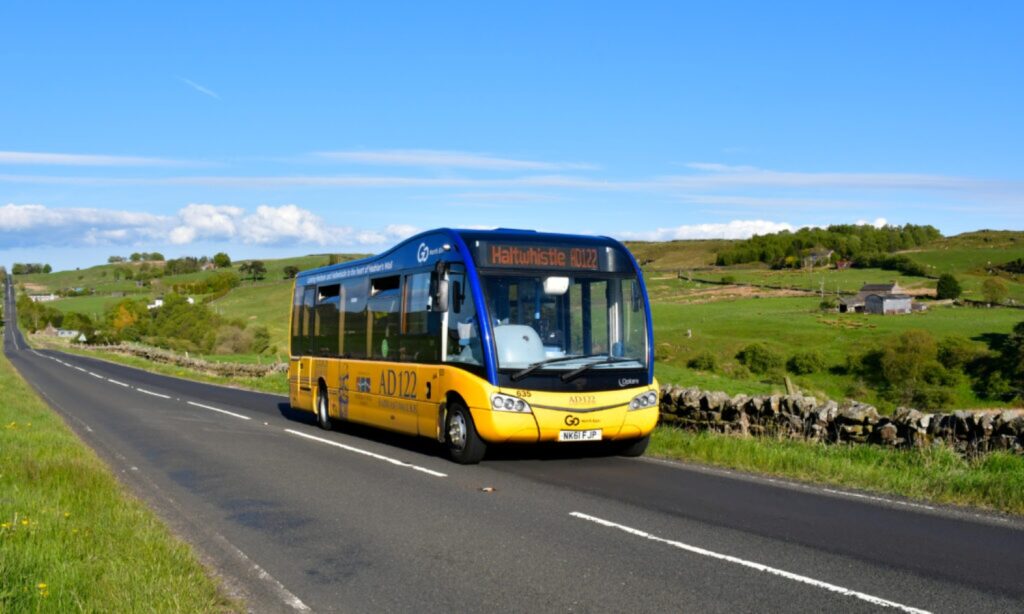
Yes, a combination of train and bus makes car-free visiting very practical, particularly in summer. The AD122 Hadrian’s Wall Country Bus (run by Go North East) is a seasonal service connecting key sites along the central section including Housesteads, Vindolanda, and Chesters. It is designed to connect with Tyne Valley Line trains at Hexham and Haltwhistle.
The HW1 bus service connects Carlisle and Walltown Crags in the west and some services are timed to link with the AD122.
For rural areas not served by bus, walking or cycling between sites is a popular option.
Is there parking at Hadrian’s Wall sites?
Most major visitor sites have their own car parks. If you are exploring the central section of the Wall, a one-day parking pass from The Sill gives access to all Northumberland National Park-operated Hadrian’s Wall car parks.
In market towns along the route – including Hexham, Brampton and Haltwhistle – free or pay-and-display parking is available.

Can I cycle along Hadrian’s Wall?
Yes. Hadrian’s Cycleway (route 72) is a dedicated route following the Wall corridor from Ravenglass to South Shields (around 170 miles). The route includes a mix of on-road sections and traffic-free paths, signposted bustlingwith blue cycle signs. The central section has steeper terrain; coastal areas are flatter.
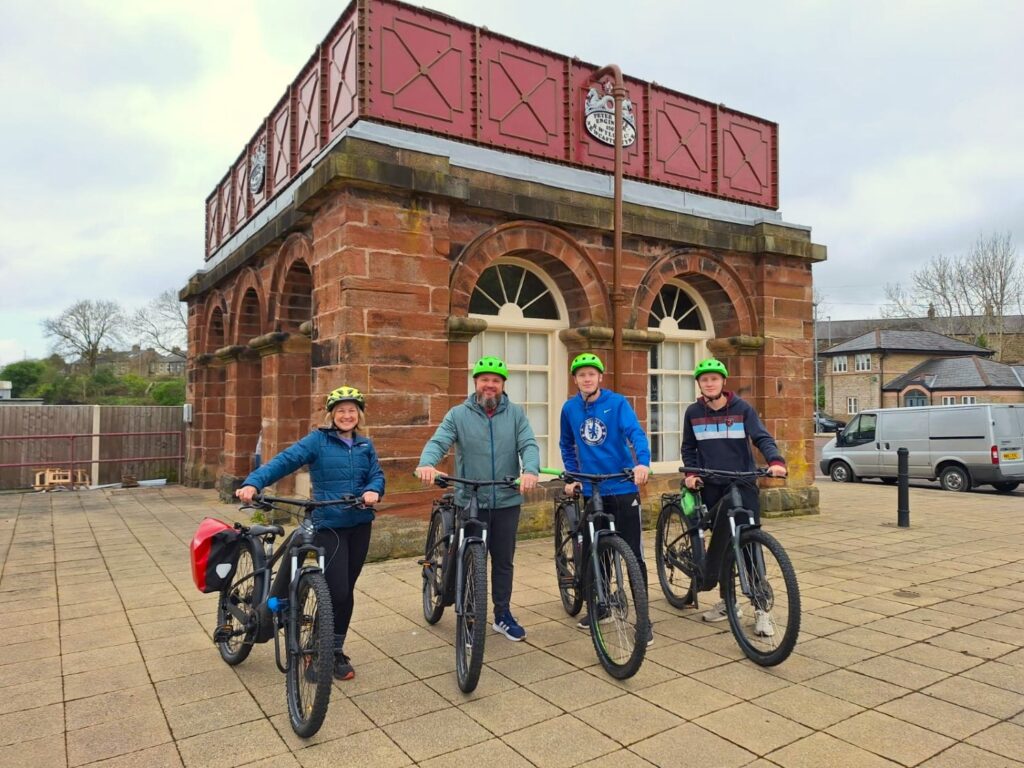
Electric bikes are available through Hadrian Cycles, who can deliver to Haltwhistle station. E-bike charging points are available at Vindolanda, The Cycle Hub, and Segedunum.
Walking the wall
How long is the Hadrian’s Wall Path and how difficult is it?
The Hadrian’s Wall Path National Trail runs 84 miles (135 km) coast to coast from Wallsend in the east to Bowness-on-Solway in the west. Most walkers complete it in 6–8 days. The route is suitable for anyone with a reasonable level of fitness.
It does not require mountaineering skills, but the central section crosses rolling hills and can be muddy after rain. Good waterproof footwear is essential. The trail is clearly signposted throughout, but you can also walk Hadrian’s Wall – or parts of it – with a professional guide.
Where is the best place to see the Wall itself?
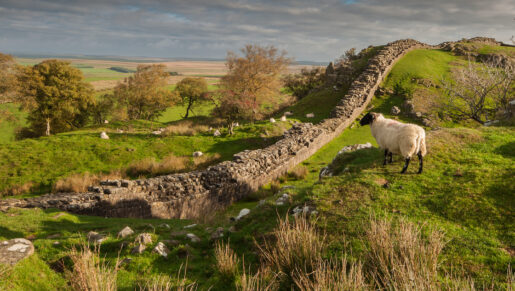
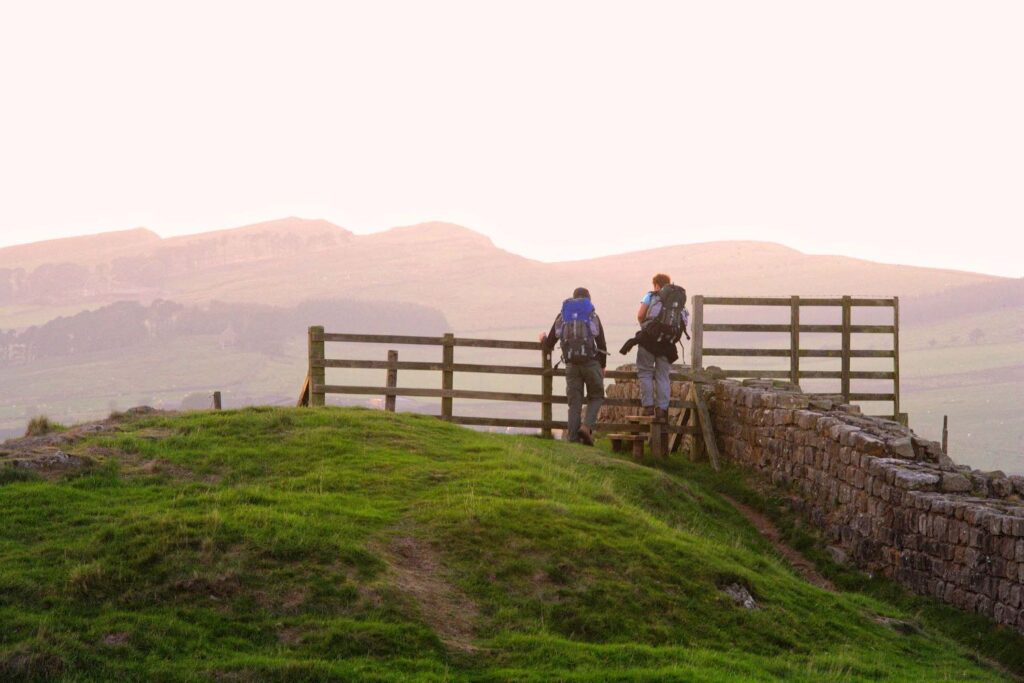
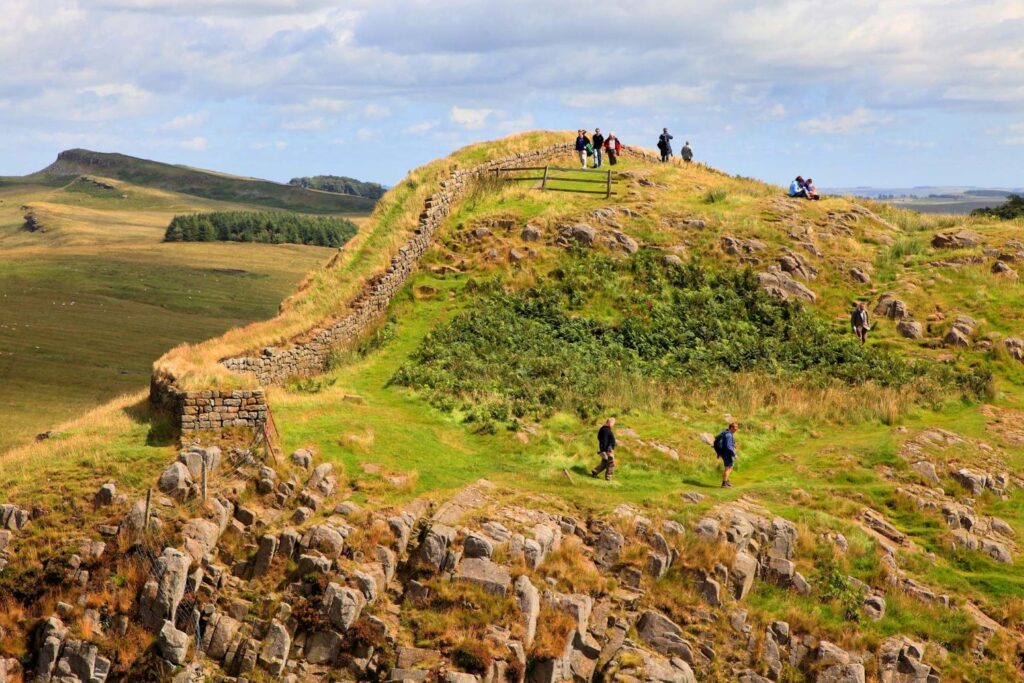
The most dramatic and well-preserved sections of the Wall are found in the central section around the Whin Sill crags, particularly at Walltown Crags, Cawfields, and the stretch near Housesteads. Birdoswald has the longest continuous surviving stretch.
In the east, the Wall passes through Newcastle but is less visible above ground. The west coast section around Bowness-on-Solway is atmospheric and largely traffic-free.
Families and accessibility
Is Hadrian’s Wall suitable for families with children?
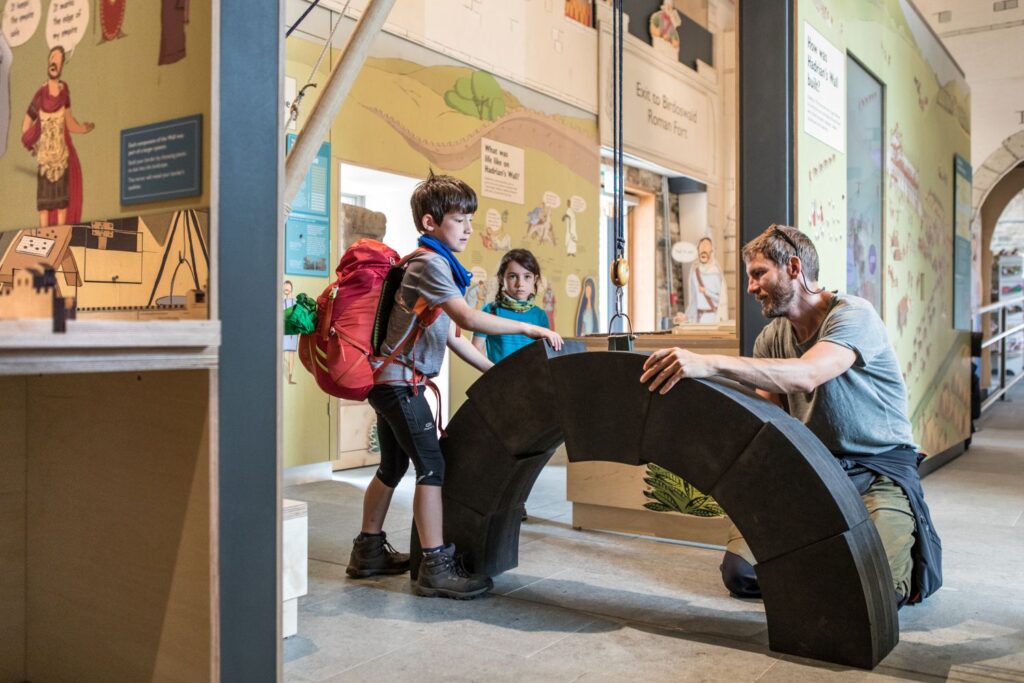
Very much so. The Northumberland Family Itinerary on this site is designed for families with children up to around 14, covering the central section between Corbridge and Greenhead.
Sites like Vindolanda, the Roman Army Museum and Housesteads all offer interactive experiences that engage children of all ages.
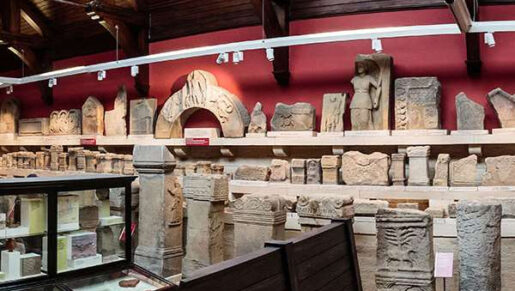
Tullie museum and art gallery in Carlisle has something for everyone with plenty of fun activities. Its amazing Roman collection is just one of the numerous treasures on display. The Great North Museum: Hancock in Newcastle-upon-Tyne is another great option for families.
Many attractions have cafés and/or picnic areas and good toilet facilities.
Is Hadrian’s Wall accessible for visitors with mobility needs?
Accessibility varies by site. Chesters Roman Fort, the Roman Army Museum, and Corbridge Roman Town have good wheelchair access to significant portions of the site.
The Hadrian’s Wall Path itself involves uneven terrain and is not suitable for wheelchairs throughout.
- The Sill National Landscape Centre has step-free access, lifts and an accessible rooftop offering panoramic views of Hadrian’s Wall.
- Walltown Country Park set under dramatic crags, now has a mile (1.6km) of enhanced, accessible footpaths and offers pre-bookable Tramper hire. You’ll also find accessible picnic tables and benches here.
Individual attraction websites carry detailed accessibility information. Please check these before you visit and contact sites directly if you have specific requirements.

Is Hadrian’s Wall dog-friendly?
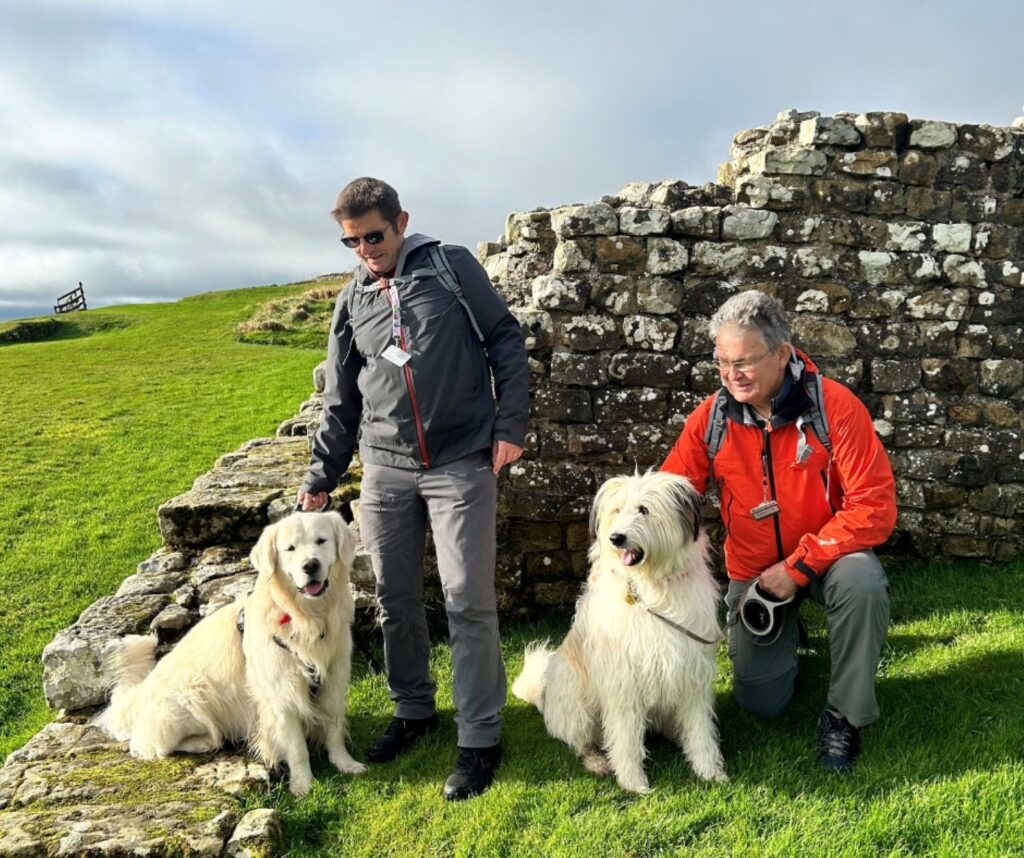
Yes, the area is very welcoming to dogs. The Hadrian’s Wall Path allows dogs throughout, but please follow this guidance to protect wildlife and farm animals . Many cafés, pubs, and accommodation options along the route are dog friendly. Several attractions, including Chesters Roman Fort, allow dogs on leads in the grounds. Take a look at our dog-friendly days out guide and our dog-friendly café recommendations.
Enjoyed our Hadrian’s Wall Guide?
There is a lot more information accessible via our home page. Plan your perfect visit to Hadrian’s Wall Country whether you have a fortnight to spend here or just an afternoon.
We’re always very happy to answer any questions you have. Simply contact us via email and we’ll get back to you as soon as we can.